
Posted by Service Dog Headquarters on May 28th 2026
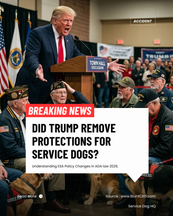
Did Trump Remove Protections for Service Dogs? Understanding the ESA Policy Changes
A recent wave of online rumors has suggested that federal policy changes under the Trump administration removed protections for service dogs, leaving veterans and disabled individuals at risk of eviction or homelessness. These claims are inaccurate. Service dog protections remain fully intact. The adjustments that occurred apply only to emotional support animals (ESAs), not trained service animals.

This article breaks down what changed, why it changed, and what it means for service dog handlers, ESA owners, and housing or travel policies.
What Actually Changed
The legal updates focus exclusively on untrained emotional support animals. These animals, while often meaningful to their owners, are not trained to perform disability‑mitigating tasks and therefore do not fall under the Americans with Disabilities Act (ADA).
Service dogs — including those in training — continue to receive full federal protection. Their status, access rights, and housing accommodations remain unchanged.
Service Dogs vs. Emotional Support Animals
The distinction between service dogs and ESAs has always existed, but the updated rules reinforce it more clearly:
Service Dogs
- Individually trained to perform tasks related to a disability
- Held to strict behavioral and public‑access standards
- Protected under ADA, HUD, and airline regulations
- Considered essential medical equipment, not pets
Emotional Support Animals
- Provide comfort but do not perform trained tasks
- Not required to meet public‑access or behavior standards
- No longer granted special housing or airline privileges
- Legally categorized as pets
The policy changes reflect this difference by ensuring that only trained disability‑mitigating animals receive the same protections as other medical aids.
Why the Rules Were Tightened
The ESA system became a target for widespread abuse. Online companies sold questionable “ESA letters,” social media influencers flaunted untrained animals in public spaces, and landlords reported increasing property damage from pets brought in under fraudulent ESA claims.
These abuses created real consequences for disabled individuals who rely on trained service dogs. Fake service animals and misrepresented ESAs frequently caused disruptions, distractions, and even attacks on legitimate service dogs. The new regulations aim to reduce these risks and protect the integrity of service dog teams.
Are Veterans or Disabled Individuals Losing Housing?
No. There is no evidence of veterans or disabled individuals being evicted because of these changes. The updated rules do not affect service dog handlers, including those with PTSD or other disabilities commonly supported by task‑trained dogs.
The only individuals impacted are ESA owners who previously relied on the ESA housing loophole to avoid pet fees or bypass no‑pet policies. Under the new rules:
- ESAs must pay standard pet fees
- ESAs cannot force access into no‑pet housing
- Failure to pay pet fees can result in standard lease enforcement, not disability‑related eviction
These outcomes stem from normal rental policies, not from the removal of disability protections.
Air Travel: What Changed and What Didn’t
Airline policies now mirror housing rules:
- Service dogs continue to fly in the cabin at no cost.
- ESAs are treated as pets and must follow standard airline pet policies, including fees and cargo requirements.
This shift was prompted by high‑profile misuse of ESA designations and increasing safety concerns on flights.
Why the Changes Benefit Service Dog Teams
For legitimate service dog handlers, the updated regulations offer several advantages:
- Fewer untrained animals in public spaces
- Reduced risk of interference or attacks on service dogs
- Less confusion for businesses and the public
- Decreased exploitation of disability rights by predatory ESA‑letter companies
By reinforcing the distinction between trained service dogs and untrained ESAs, the law strengthens protections for those who rely on service animals for daily functioning.
The Bottom Line
Service dog protections remain fully intact. The recent policy changes do not affect trained service animals or their handlers. Instead, the updates close long‑abused loopholes surrounding emotional support animals, ensuring that disability rights are not diluted or exploited.
ESAs can still provide meaningful emotional support, but they are now treated as pets under housing and travel regulations. Service dogs, as highly trained medical aids, continue to receive the full legal protections they have always had.
SOURCES