

Posted by The Extra Spoon - Service Dog Headquarters on May 11th 2026
We Do Not "Have The Market Cornered on Human Suffering" - A Letter to Online Disability Communities About the Race to the Bottom
The film I Am Sam follows Sam Dawson (Sean Penn), a father with an intellectual disability fighting for custody of his daughter Lucy (Dakota Fanning), alongside his lawyer Rita (Michelle Pfeiffer).
But beneath the custody battle is something much deeper: a reminder that suffering is not exclusive to any one group.
Within the disability community, there is often an unspoken competition over who has it “harder.” We compare diagnoses, trauma, limitations, and visibility. Sometimes we assume people who appear more successful, more functional, or less visibly disabled could never understand pain the way we do.
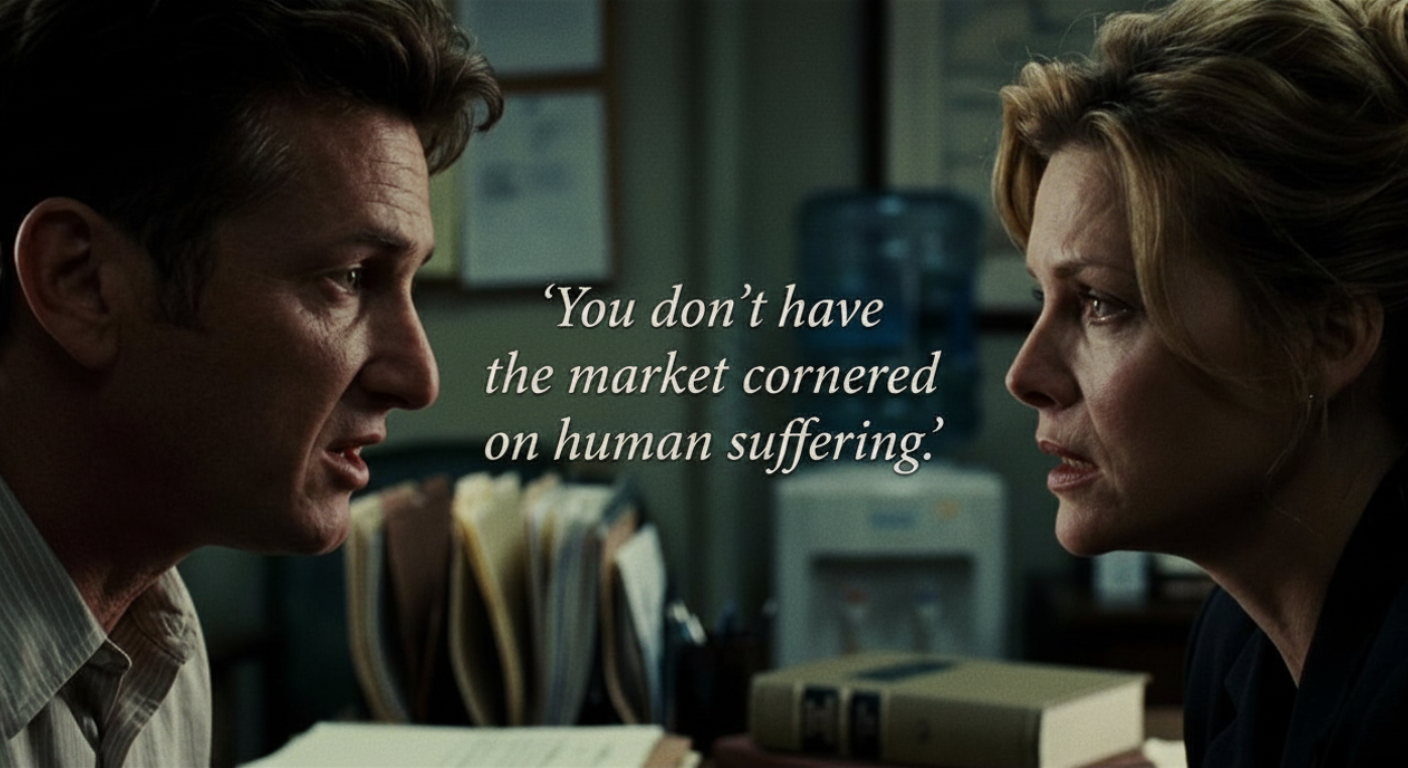
In one powerful scene, Sam lashes out at Rita:
“People like you don't know what it's like to get hurted.”
He assumes her career, intelligence, and appearance protect her from suffering.
Then Rita responds with the line that changes everything:
“You think you got the market cornered on human suffering?”
That line matters because it challenges a dangerous mindset: the belief that our pain is the only pain that counts.
Pain Is Not a Competition
Disability brings real exhaustion, exclusion, and frustration. Many disabled people spend years fighting to be heard, respected, or accommodated. The anger that comes from that experience is real.
But when we start treating every misunderstanding as intentional cruelty, or every person as an enemy before they have a chance to learn, we unintentionally isolate ourselves further.
Ignorance is not always malice.
Most people will never understand our disabilities as deeply as we do. That gap in understanding can become an opportunity for communication instead of conflict.
Education works better when it begins with the possibility that someone simply does not know better yet.
The Danger of Assumptions
Sam placed Rita on a pedestal of “perfection” so he could justify his anger toward her. But people we envy or resent are often struggling too, just in ways we cannot see.
You can have:
- a healthy body
- a successful career
- money
- intelligence
- social status
…and still feel invisible, disposable, lonely, or broken.
Human suffering wears many different faces.
A Personal Perspective
As both a disabled person and a business owner, I’ve experienced both sides of this conversation.
My disabilities did not disappear because I built a business. I still struggle. I still hurt. I still navigate barriers every day.
But I also know what it feels like to make a human mistake and immediately face public outrage before being given the chance to fix it.
Early in my business journey, a simple spelling error turned into harassment, threats, and attempts to damage our reputation. Ironically, much of it came from people within the same community I believed would understand struggle, grace, and growth the most.
That experience forced me to ask difficult questions:
If every interaction becomes digital warfare over honest mistakes, how willing will people be to engage, support, or learn in the future?
Respect cannot grow where fear replaces communication.
From Competition to Community
None of this erases the very real mistreatment disabled people face every day.
The trauma is real. The exhaustion is real. The anger is understandable.
But we cannot become so consumed by our pain that we lose our ability to see humanity in others.
Too often, we tear each other apart while larger systems and corporations continue causing far greater harm unchecked. We isolate, gatekeep, and attack until eventually everyone is standing alone behind emotional walls.
And loneliness helps no one heal.
Pain is not a finite resource we must compete over.
Having a disability may give us a unique understanding of struggle, but it does not give any of us a monopoly on suffering.
Not you. Not me. Not anyone else.
When we stop trying to “corner the market” on who hurts the most, we create space for something better: understanding, accountability, empathy, and real community.
That is where healing begins.